Local life · Red Deer, Alberta
Published
Red Deer Snow Clearing: Green Routes, Grey Routes and Windrows
Red Deer prioritises routes differently. When residential clearing is triggered, Green Routes are cleared before Grey Routes. The City’s current plan removes Green Route windrows but leaves manageable windrows on Grey Routes. Check the current map, signs and alerts for your own street; an old discussion is not today’s plough schedule.
Facts checked
In this story
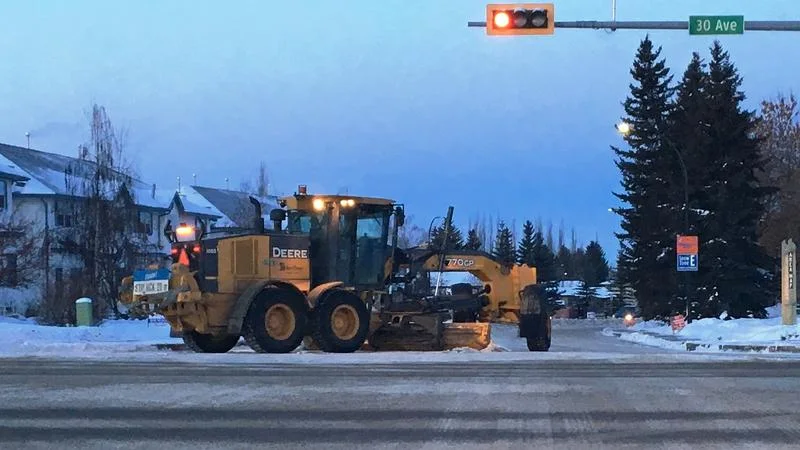
The cleared road and the pile beside it
Red Deer’s snow-clearing system can improve a driving lane while leaving a resident with a fresh problem beside it. A windrow occupies space where people park, cross or reach a property. That is why arguments about ploughing so often happen at the edge of the road rather than in its newly cleared middle. The useful question is what the City intends to leave on your particular route, and whether an obstruction goes beyond that standard.
The colour system supplies the answer. Green Routes include residential collectors, transit routes and school zones. Grey Routes are quieter local streets. Both have a mobility goal once clearing is triggered, but their intended windrow outcomes differ. Before comparing your street with a neighbour’s, check whether they are being cleared to the same standard in the first place.
Source: City of Red Deer: how current snow clearing works
The route colour explains part of the difference
The current City plan gives different roads different jobs. Green Routes cover the busier residential collectors, transit routes and school zones. Grey Routes cover quieter local residential streets. Once a residential campaign is triggered, Green Routes come first. The intended result is not identical: Green windrows are removed, while Grey Routes are made safe and passable with manageable windrows left along both sides.
The stated residential mobility target is 7–14 calendar days once clearing is triggered. That phrase matters. It is not a promise that every residential street will be scraped to bare pavement after every snowfall. Priority streets, hills, bridges and hospital access have different targets. A neighbour on another route may therefore see a different response without either person having misunderstood what happened outside their house.
Source: City of Red Deer: how current snow clearing works
The frustration can be real even when the rule is followed
Knowing the policy does not make a difficult crossing easy or restore a parking space. It does make a useful complaint more specific. Describe the location and the mobility problem rather than reporting simply that there is snow. An obstructed access point, an unsafe ridge and a normal Grey Route windrow may call for different responses. The presence of a plough alone does not answer which one you are seeing.
The older complaints should also stay in their own years. They do not establish that a current November campaign has failed. A March 2026 discussion showed another familiar divide: people who needed to drive before dawn were tired of snow, while others wanted moisture and worried about dry conditions. Appreciating precipitation in principle and disliking the journey to work can coexist. Nobody has to enjoy digging out the car as a demonstration of civic maturity.
Source: Residents discuss windrows and blocked parking, December 2022
Source: Red Deer residents question snow clearing, November 2022
Source: Red Deer commuters and moisture concerns, March 12, 2026
Follow the whole journey, not just the traffic lane
The City has separate timelines for bus stops, public sidewalks and trails. That matters to someone whose trip begins on foot, includes transit and ends at another street. A passable road is one stage of that journey. The published page gives priority bus stops three days, followed by additional clearing periods for lower priorities, and describes public sidewalk and trail targets separately. Use the current map for the network the City maintains.
For a report, describe exactly where the problem interrupts access. For parking, follow current signs rather than a screenshot of last winter’s campaign. Older complaints about piles and crossings explain why the issue matters, but do not establish a present failure. The test this November is the actual route, current operation and obstruction in front of you. That is more useful to the next morning than a citywide argument conducted over an unidentified pile.
Source: City of Red Deer: how current snow clearing works
Source: City of Red Deer: route lookup and dated campaign updates
Source: City of Red Deer: snow and ice control programme
Source: Red Deer residents question snow clearing, November 2022
Questions people ask
What is a Green Route in Red Deer?
It is a busier residential route, including collectors, transit routes and school zones. Green Routes are cleared before Grey Routes during a residential campaign.
Source: City of Red Deer: how current snow clearing works
What is a Grey Route?
It is a quieter local residential street. The City’s intended outcome is safe and passable conditions with manageable windrows remaining.
Source: City of Red Deer: how current snow clearing works
Are all residential windrows removed?
No. The current plan removes Green Route windrows but leaves manageable windrows on Grey Routes.
Source: City of Red Deer: how current snow clearing works
What starts a residential ploughing campaign?
The City considers impaired mobility, including snowpack, freeze-thaw effects, snowfall and forecasts. It is not automatically every snowfall.
Source: City of Red Deer: how current snow clearing works
Does the 7–14 day target start with every snowflake?
No. The residential target applies once clearing is triggered. It is not a universal bare-pavement promise after each snowfall.
Source: City of Red Deer: how current snow clearing works
Can a residential parking ban apply overnight?
Yes. The City says campaign restrictions operate at all hours until the street is completed. Follow the current signs.
Source: City of Red Deer: how current snow clearing works
How do I find my route colour?
Use the City’s address-based route lookup and current map. Do not assume a nearby street has the same priority.
Source: City of Red Deer: route lookup and dated campaign updates
Can I sign up for more than one address?
Notify Red Deer allows locations such as home, work, school or a family member’s home to be included in alerts.
Source: City of Red Deer: how current snow clearing works
Does a February update describe today’s November campaign?
No. Read the date of a notice and use current signs and alerts for today’s operation. An old page entry should not be treated as a fresh announcement.
Source: City of Red Deer: route lookup and dated campaign updates
What should I report about a difficult snow pile?
Give the exact location and explain the access or mobility problem. Distinguish a blocked crossing or hazardous obstruction from a general objection to any windrow.
Something changed? Tell us about a correction.